Cagliarize
A permanent déjà vu, maintained for a population that changes daily.
Overtourism is not, first of all, a density of visitors. It is the temporal loop a place enters when its daily rotation of guests requires it to be recognisable on arrival. The historic centre gets repaved to match the brochure that promised it. The shopfronts standardise. The vernacular is compressed into the format a phone can capture in three seconds. Every visitor arrives at a place they have already seen; every visitor leaves before the place can remember them. The city cannot age. It cannot forget. It cannot be surprised.
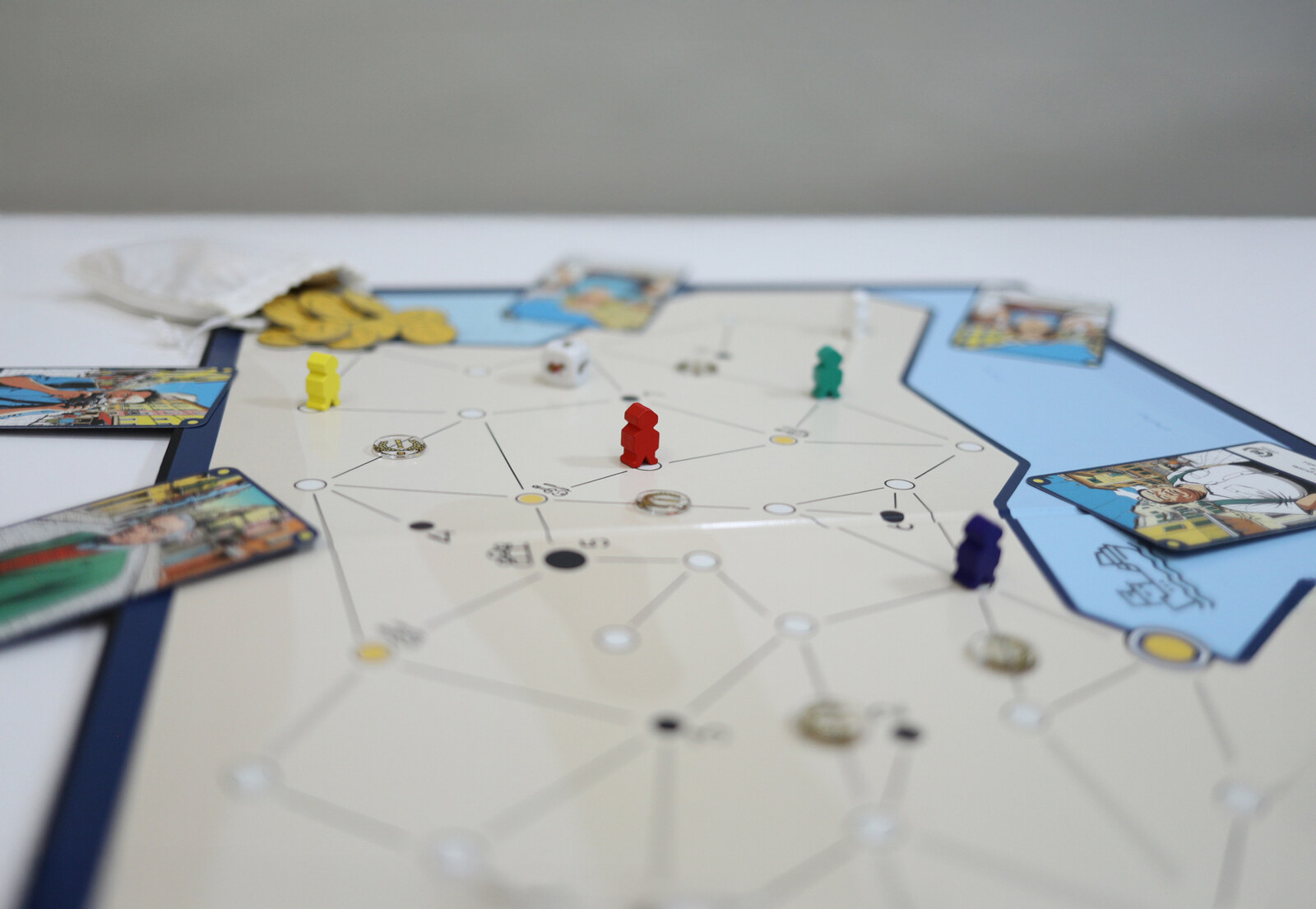
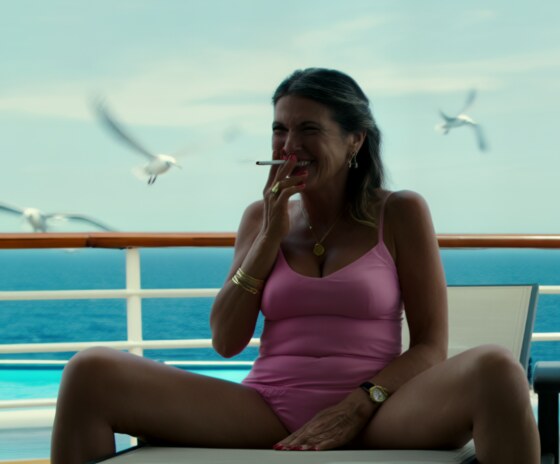
UNSEASONED is a boardgame produced industrially in a single copy during a design course at the Istituto Europeo di Design in Cagliari — an object that sits between artefact, satire, and pedagogic exercise. Around its board the loop is simulated at scale 1:1: players compete to season, price, and disgorge a seaside that never gets to be off- season. The trailer above assembles its figures — the pink-swimsuit smoker, the seagulls circling for scraps, the goat improvising a shoreline — as extras in the same economy the board itself models.
The impoverishment is double. The place loses the capacity to change — its residents, its rhythms, its idle hours are all optimised for a customer who won't be back. The visitor loses the capacity to be somewhere — the itinerary is a checklist of what has already been photographed, and the return home is the moment the photographs are sorted into the same folders as everyone else's. Both sides are drained by the same loop, running at industrial cadence.
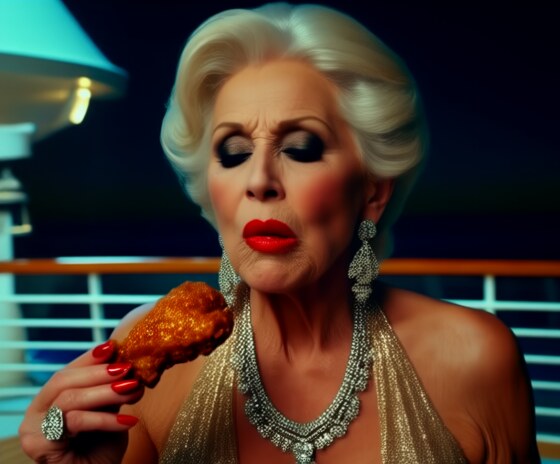
The synthetic passenger eating a fried drumstick on the promenade deck is not satire. She is a market segment: an older customer with disposable income and photogenic jewellery, generated by the same optimisation loop that priced her cabin. She has never boarded a ship and never won't. The advertising doesn't need her to exist — it needs her to be recognisable.
The loop has an address, and the trouble with this one is that it has no villain. Milan can point at a fund. Here the landlord is somebody's uncle. The rent is pulverised — a few thousand small owners, one flat each, who worked out that an inherited apartment earns more in weekends than a lifetime of wages ever did, and who are not wrong about that. This is extraction with a democratic base, which makes it untouchable: any limit on it offends an entire social class at once, in a region whose incomes are among the lowest in the country. The word for a proprietor who behaves like a fund but votes in your municipality is constituent.
Tourism did not empty the city. It arrived to find one that had been emptying for forty years and did the decent thing: it moved in. What was leaving anyway can now never return, because every flat converted to a bed exits a market that local salaries cannot re-enter at the new price. And the historic centre has been magnificently restored — this is true, the landlords' association says it constantly, and they are right. The buildings were saved. It was only the inhabitants who were not. Call it taxidermy: the animal has never looked better.
Downstairs the same operation runs on the shops. In fifteen years the centre lost twelve hundred businesses and gained seven hundred-odd places to eat or sleep, which is not a market adjusting but a set of functions swapped one for one. The hardware shop, the newsagent, the bookshop — the trades that let a person live in a quarter rather than visit it — have given way to the trades that let a person be served in it for six hours. A shopkeeper in Marina now spends her afternoons explaining to disembarked passengers that Sardinia does not, in fact, produce pesto. She is not being asked for a product. She is being asked to be the Mediterranean, generically.
The ship, meanwhile, comes every two days, and that is the elegance of the arrangement: not one giant event to organise against, but a permanent drizzle of small ones, under a climate so obliging that there is no longer an off-season in which anyone might take the streets back. The municipality has responded by lifting the overnight levy from two euros to five, and by tendering for a consultant to build the territorial brand — a coordinated identity, commissioned after the flows had already arrived. The city has put out a call for someone to explain what it is. The applicants will use the flamingos.
Authenticity, priced per night.
Fifteen decks of standardised leisure dock in a port whose historic centre has already been repaved to match the brochure. The vessel refuels, disgorges, reboards, and leaves before dinner. The residents who still live behind the postcard have learned not to look up. The class that cannot afford a home has learned to rent one for the weekend, one weekend at a time, until the streetplan is a themepark of its own memory.
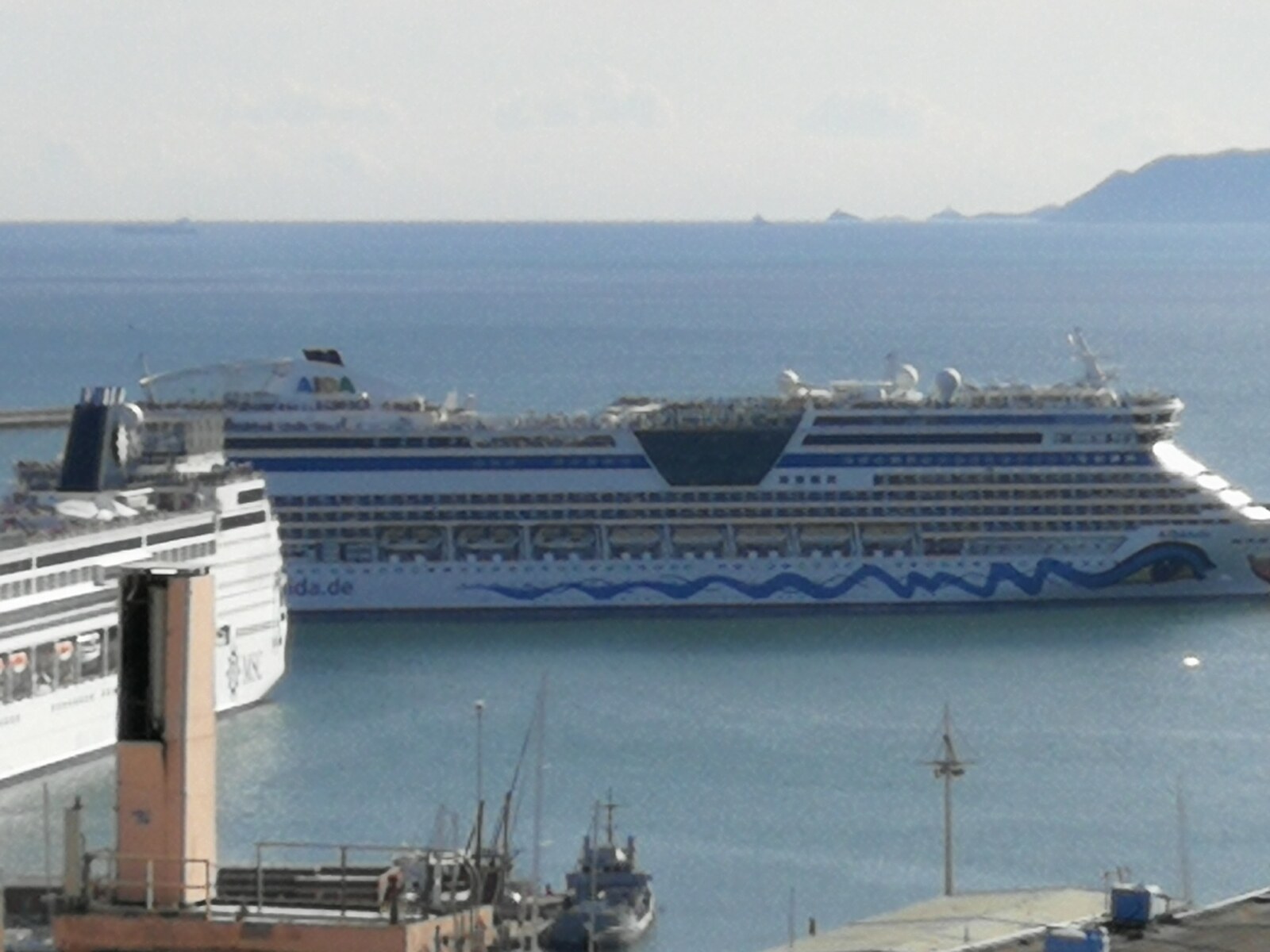
UNSEASONED, boardgame produced industrially in a single copy during a design course at IED Cagliari. Trailer frames, 2025. Synthetic image from HATERS(2024–2026). AIDA cruise ship in port (2017).